
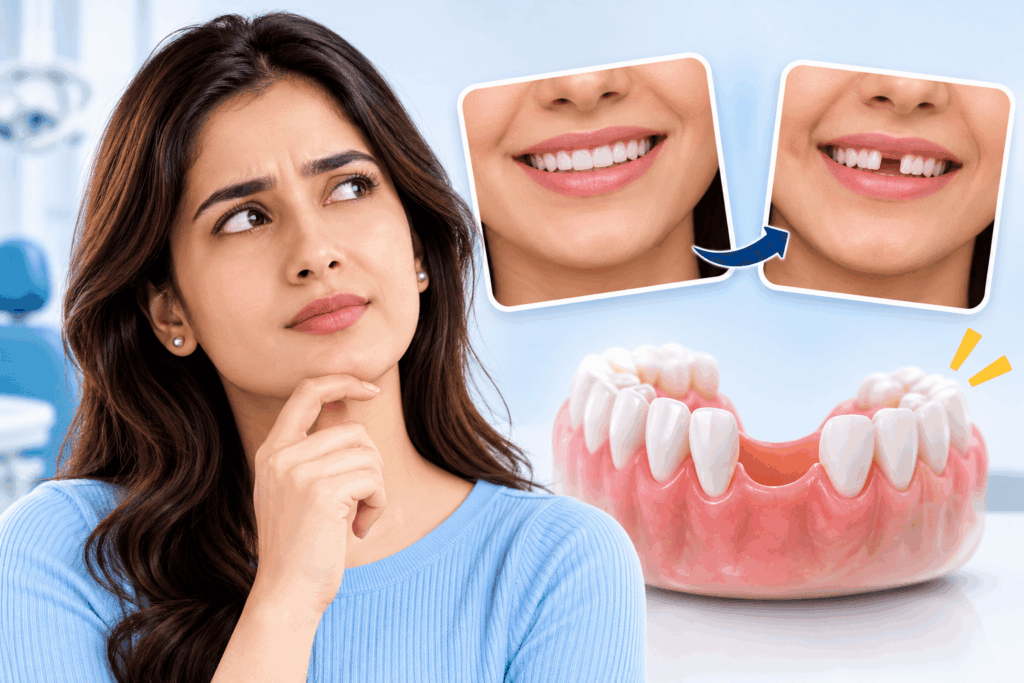
Teeth do more than help you chew. They support the lips, maintain your bite and work with the jawbone to support your lower face.
After tooth loss, changes may develop over time. The effect depends on the number and position of missing teeth and how long the gaps remain.
.
How Do Teeth Support Your Face?
Front teeth help support the lips, while back teeth help maintain the height of your bite and the way your upper and lower jaws meet.
After a tooth is lost, the jawbone in that area may gradually reduce because it no longer receives stimulation from the tooth root during chewing. This is known as bone resorption. It can affect the shape of the gum ridge and the support available for replacing the tooth later.
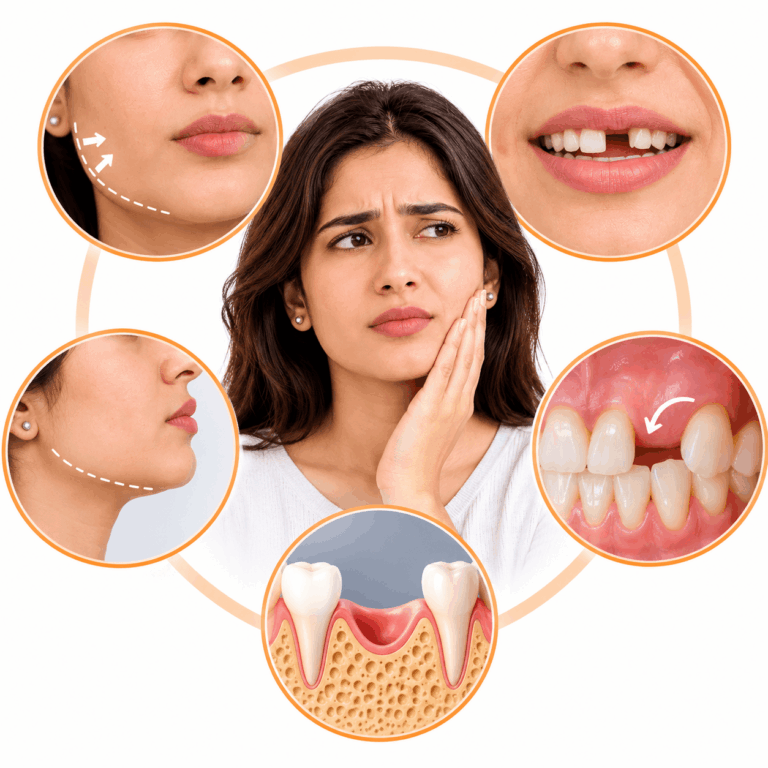
5 Ways Missing Teeth May Affect Your Face Shape
- Less Support for the Cheeks
Back teeth help maintain the height of your bite. If several are missing, the way your jaws come together may change. Some people may notice less support around the cheeks or a change in the lower face. A single missing back tooth usually does not cause a dramatic visible change by itself.
- Changes Around the Lips
The front teeth provide support behind the lips. When several front teeth are missing, the lips may look less supported, particularly if the surrounding bone and gum tissue have also changed.
- A Shorter-Looking Lower Face
When many teeth are missing, the bite may lose some of its original support. The lower part of the face can then appear shorter or more folded, especially when tooth loss has been present for a long time. This is more commonly a concern with multiple missing teeth than with one gap.
- Movement of Nearby Teeth
Teeth help keep each other in position. If a gap is not replaced, neighbouring teeth may gradually lean or drift towards it. A tooth in the opposite jaw may also move out of its usual position. This may disturb the natural alignment of your teeth and affect your chewing comfort.
- Changes in the Jawbone
Over time, the bone beneath the missing tooth may gradually become thinner and lose some of its original volume. If several teeth are missing, these changes can alter the shape of the gum ridge and may affect which replacement options are suitable.
Does One Missing Tooth Change Your Face?
Not necessarily. A single missing tooth, particularly at the back of the mouth, may not create an obvious change in face shape. However, it can still affect chewing, allow other teeth to move and change how your bite fits together.
Multiple missing teeth are more likely to affect facial support. If you have a gap, a dentist can check whether nearby teeth or the jawbone are changing.
What Are the Options for Replacing Missing Teeth?
The most suitable option depends on your oral health, the location and number of missing teeth, and the condition of your jawbone. Your dentist may recommend:
Dental Implants: An implant is placed in the jawbone to support a replacement tooth. It restores chewing function and can help maintain bone in the area, but it cannot prevent every type of bone change.
Dental Bridges: A bridge fills the space with an artificial tooth supported by neighbouring teeth or implants, depending on the design.
Dentures: Removable partial or complete dentures can replace several teeth or all teeth in an arch and help restore appearance and function.
Your dentist can explain the benefits and limitations of each option after an examination.
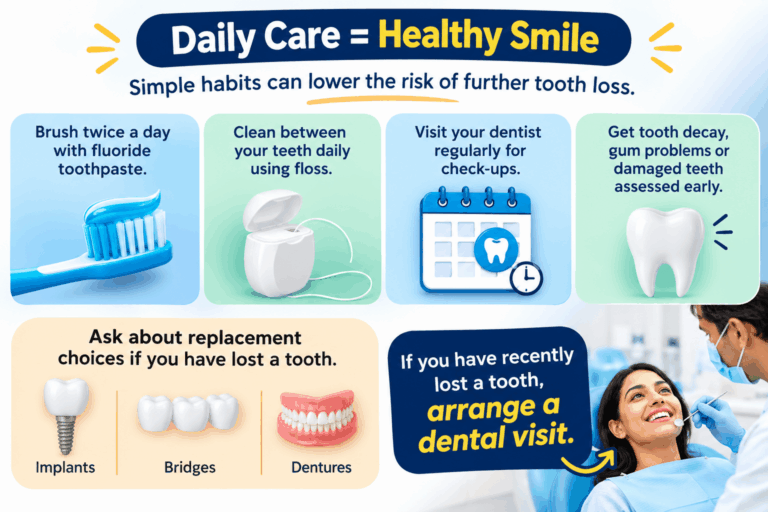
How Can You Protect Your Remaining Teeth?
Frequently Asked Questions
Can missing teeth make cheeks look sunken?
Losing several teeth may reduce support from the bite and surrounding structures. This can contribute to a sunken appearance in some people.
Can dental implants prevent facial changes?
An implant can help maintain bone in the area where it is placed. However, it cannot stop all changes related to ageing or bone loss elsewhere.
How soon should I replace a missing tooth?
There is no single timeline for everyone. Visit a dentist soon after tooth loss so they can assess healing, bone condition and suitable replacement options.
Conclusion
Tooth loss can change more than your smile. Depending on their number and position, they may change your bite, allow nearby teeth to shift and contribute to changes in the jawbone and facial support. An untreated gap can also lead to other dental concerns.
At Sabka Dentist, a dental consultation can help you understand your tooth replacement options and plan the right care for your oral health.


