How Does Vaping Affect Your Teeth, Gums and Oral Health?

Talk to a Dentist Now!

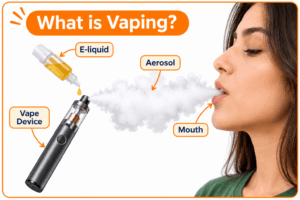
What Is Vaping?

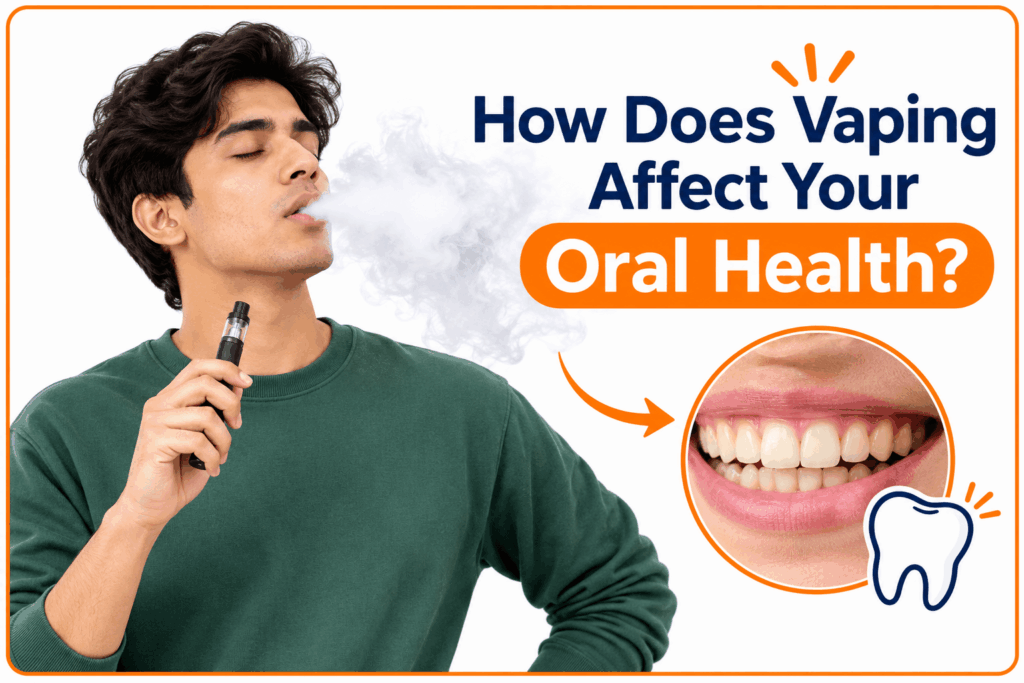
Vaping involves inhaling an aerosol created when an electronic device heats a liquid. This liquid, often called e-liquid or vape juice, may contain nicotine, flavourings, propylene glycol, vegetable glycerin and other substances. The ingredients vary between products.


The aerosol is not simply water vapour. Even nicotine-free products may contain ingredients that contact oral tissues.


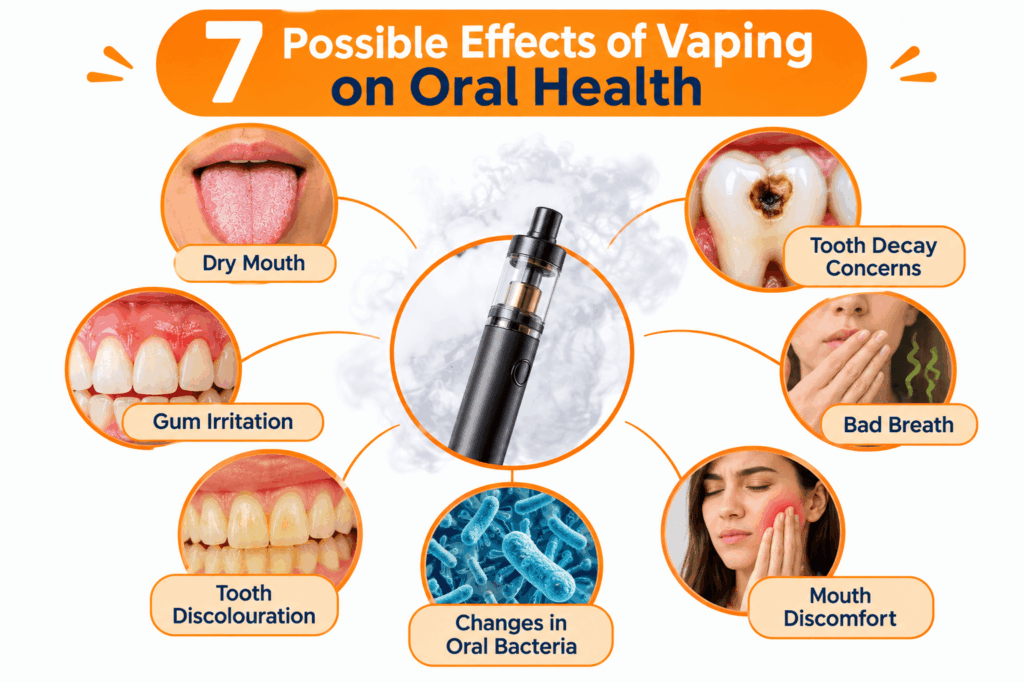
7 Possible Effects of Vaping on Oral Health

Vaping and Oral Health-Effects
  1. Dry mouth

Some people who vape notice dryness or a sticky feeling in their mouth. Saliva keeps oral tissues moist, helps clear residue and balances acids. When the mouth feels dry, speaking and swallowing may become uncomfortable. Dryness can also make bad breath more noticeable. If it continues, ask your dentist for advice.

  1. Tooth decay concerns

Tooth decay occurs when acids gradually damage the hard outer surface of a tooth. Saliva helps protect teeth by clearing residue and balancing acids. If vaping contributes to dry mouth, the mouth may have less of this natural protection. To keep your enamel strong, make a habit of brushing twice a day using fluoride toothpaste and flossing daily to clean between teeth.

  1. Gum irritation

Research is examining possible links between vaping, gum inflammation and changes in bacteria around the gumline. The long-term effects remain unclear. Watch for swelling, tenderness, bleeding during brushing or receding gums. These symptoms need a dental examination.

  1. Bad breath

Dryness can make it harder for the mouth to clear bacteria and residue. Some vape flavours may leave a lingering taste. Brush your teeth, clean your tongue gently, floss daily and drink water regularly. If unpleasant breath continues, a dentist can check for decay, gum problems or other causes.

  1. Tooth discolouration

Cigarette smoke is a recognised cause of tooth staining. Vaping does not expose teeth to the same tar produced by burning tobacco, but some vape liquids contain nicotine and other substances. Their role in tooth discolouration is not yet clear, and more research is needed.

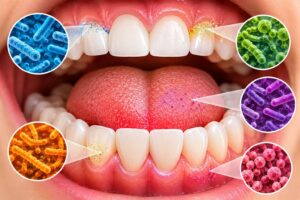
  1. Changes in oral bacteria

Your mouth is home to millions of tiny bacteria that make up a complex ecosystem known as the oral microbiome. A balanced community supports oral health. Some studies have found differences in the oral bacteria of people who vape, but researchers are still investigating what these changes mean and whether they contribute directly to dental disease.

  1. Mouth discomfort

Depending on the product and personal sensitivity, vaping may be accompanied by a burning or tingling feeling, a dry tongue, cheek irritation or an unusual taste. Get symptoms checked if they persist, become painful or appear with sores.

Does Nicotine Affect the Gums?

Nicotine is addictive and can affect blood vessels, potentially influencing circulation in gum tissues. Tell your dentist if you use nicotine, especially before an extraction, implant procedure or gum treatment.

 Vaping Compared with Smoking

Magnified Oral Microbiome

Cigarettes burn tobacco and produce smoke containing tar and many chemicals. Vapes heat liquid into an aerosol that may contain nicotine and flavourings. The exposures differ, but vaping is not risk-free and its long-term oral effects remain under study. If you want to stop smoking, ask a healthcare professional about evidence-based support.

Is Vaping Allowed in India?

India’s Prohibition of Electronic Cigarettes Act, 2019 prohibits activities involving electronic cigarettes, including their production, import, sale, distribution, storage and advertisement.


How Can You Protect Your Oral Health?

If you vape, consider these steps to care for your teeth and gums:

– Brush twice daily using fluoride toothpaste and a soft-bristled toothbrush.

– Clean between your teeth every day with floss or interdental brushes.

– Drink water regularly, particularly if your mouth feels dry.

– Reduce frequent sugary snacks and drinks.

– Attend routine dental check-ups and tell your dentist about vaping or nicotine use.

– Seek advice if you notice bleeding gums, ongoing dryness, pain, sores or repeated cavities.

Stopping vaping avoids further exposure to its aerosol. If nicotine cravings make quitting difficult, a healthcare professional can discuss suitable support and ways to manage dependence.

Frequently Asked Questions

Can vaping cause cavities?

Vaping may contribute to dry mouth, which can reduce saliva’s protective effects. This may create conditions that favour tooth decay, although it does not mean every person who vapes will develop cavities.

Studies are investigating possible links between vaping, gum inflammation and changes in oral bacteria. Bleeding or swollen gums should be examined by a dentist.


It may contribute to dryness or leave a lingering taste. Persistent bad breath can have several causes and should be checked.


Not necessarily. Other ingredients may still come into contact with oral tissues, and their long-term effects require further study.


Yes. This helps your dentist assess your oral health and plan care, especially before a procedure.

Conclusion

Vaping may contribute to dry mouth, bad breath, irritation and possible changes in gum health and oral bacteria. Although research is ongoing, it should not be treated as harmless. Maintain a regular oral-care routine, attend dental check-ups and seek advice about symptoms that do not go away. At Sabka Dentist, a dental consultation can help assess your teeth and gums and guide your next steps. 

Visit-Your-Dentist-Frequently

Ready for Your Own Smile Makeover?

Schedule your free clear aligner consultation at Sabka Dentist today.
Let our experts help you visualize your dream smile – and achieve it, invisibly.

👉 Book Now | ☎️ Call: 9222233111 | 📍 Visit a Sabka Dentist near you

About Author

Share

Sabka dentist Clinics